Engineer Grade vs HIP vs Higher Prismatic Sheeting
Buyer comparison of engineer grade, HIP and higher microprismatic reflective sheeting families, with ASTM Type cautions and links into product pages.
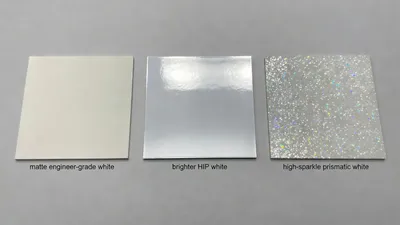
How to read sheeting “grades”
Catalogs group films as engineer grade, HIP (high intensity prismatic), microprismatic traffic and long-distance / wide-angle families. Those labels help navigation. ASTM D4956 Types and EN RA classes still come from tests on the ordered color.
Comparison table (positioning — not a certificate)
| Family on this site | Typical buyer job | Product entry |
|---|---|---|
| Engineer grade | Commercial / many lower-intensity permanent or temporary faces | Engineer grade sheeting |
| HIP | Common mid-to-high permanent sign programs | HIP sheeting |
| Microprismatic traffic | Higher-performance permanent sign programs | Microprismatic traffic sheeting |
| Long-distance / wide geometry | Demanding approach geometries | Long-distance sheeting |
| Work zone | TTC / temporary devices | Work zone sheeting |
Deep rules: structure vs ASTM Type, ASTM D4956 types, EN 12899-1 RA classes.
Choosing without over-buying
- Read the agency or customer specification first
- Map it to a family on the hub: reflective sheeting
- Demand Type/class + report id on the quote
- Only then optimize price, print process and roll size
Selection checklist: how to choose reflective sheeting.
Related definition
New to the optics? Start at what is retroreflective material?.
Related Reading
applications
Reflective Sheeting for Traffic Signs
Application landing page for permanent traffic and street signs: suitable performance grades, substrates, specification checks, and RFQ fields.
guides
Glass Bead Reflective Sheeting: Structure and Use Cases
Glass-bead enclosed-lens sheeting explained versus microprismatic film, where engineer-grade fits, and how to avoid Type mistakes in RFQs.
guides
Reflective Materials Glossary
Glossary of reflective sheeting and conspicuity tape terms: retroreflection, HIP, DOT-C2, ECE 104, SASO, SOLAS, ASTM types, and Chinese factory wording bridges.
Was this helpful?
Thanks for your feedback.